Colour psychology and how it relates to your business is a genuinely controversial aspect of marketing. There are a great many misconceptions around colours and persuasion. A lot of the “science” is simply anecdotal, hunches or conversations.
The issue with colour and how it affects us is down to many aspects; elements such as personal preference, experiences, upbringing, cultural differences, or context, often muddy the effect individual colours have on us. So the notion that colors such as yellow or purple are able to evoke some sort of hyper-specific emotion or response is about as accurate as reading Tarot cards!
In the area of branding and marketing, there have been numerous attempts to classify consumer responses to different individual colours, but the truth of the matter is that colour really is far too dependent on an individuals personal experience and can’t be universally translated to specific feelings or reactions.
That being said, there are broader messaging patterns to be found in colour perceptions and colour DOES play a fairly substantial role in purchases and branding.
In an appropriately titled study called Impact of Color in Marketing, researchers found that up to 90% of snap judgments made about products can be based on colour alone (depending on the product).
With regards to the role that colour plays in branding, results from studies such as The Interactive Effects of Colors show that the relationship between brands and colour hinges on the perceived appropriateness of the colour being used for that brand.
The merits to choosing one colour for your company logo or branding over another are easy to see. But without context, choosing one colour over another doesn’t make much sense. In other words, does the colour “fit” what is being sold.
There is very little evidence to support that orange will universally make people purchase a product more often than silver. Certain colours do broadly align with specific traits (e.g., brown with ruggedness, purple with sophistication, and red with excitement). But nearly every academic study on colours and branding will tell you that it’s far more important for your brand’s colours to support the personality you want to portray instead of trying to align with stereotypical colour associations.
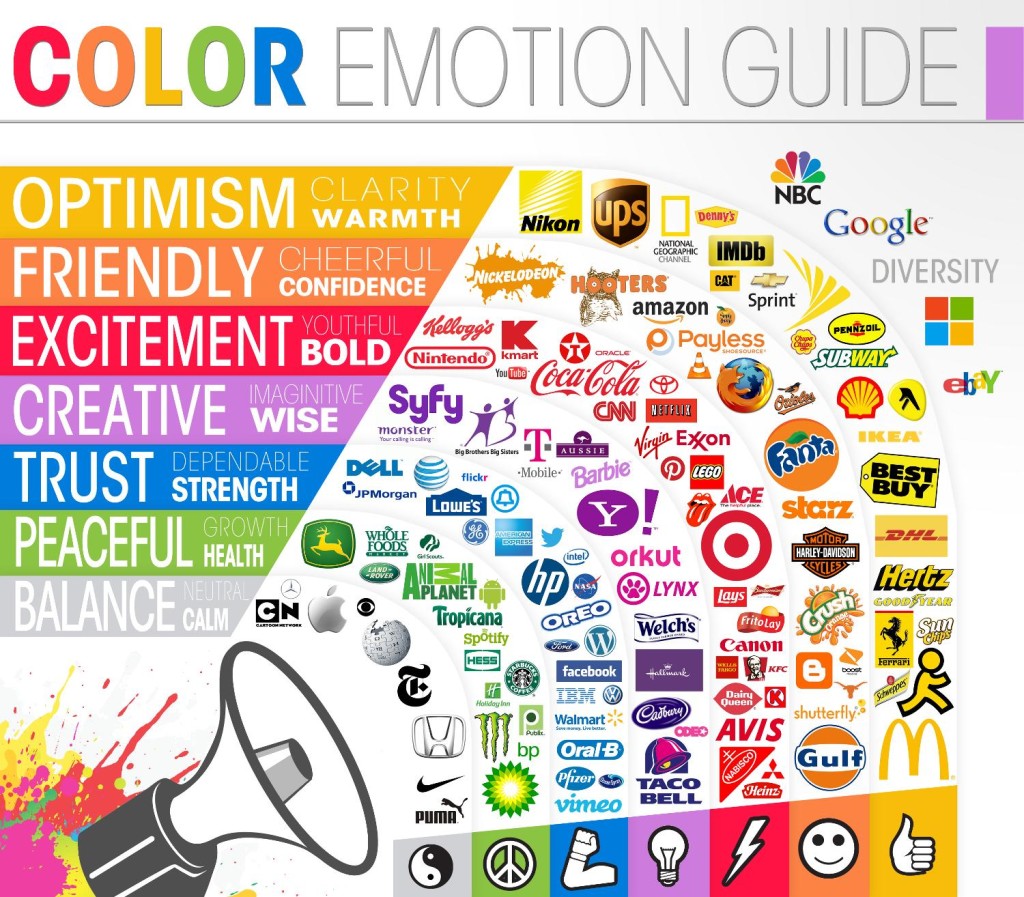
It’s the feeling, mood, and image that your brand creates that play a role in persuasion. Be sure to recognise that colours only come into play when they can be used to match a brand’s desired personality.
There is no easy, clear-cut set of guidelines for choosing your brand’s colours, but it is worth considering do the colours match your product or service and reflect the “feeling” you want to convey.
Just by having that conversation and making those colour considerations, you’ll be doing what very few SME’s do!

Right Click Digital
1 Bridge Chambers
Barnstaple
Devon
EX31 1HB
www.rightclickdigital.co.uk
Tel: 01271 523 586