What is SEO?
Search Engine Optimisation (SEO) is the process of getting your website ranked high in the search engines. Primarily with an emphasis on Google, but also Bing and Yahoo search engines.
As nearly all search engines sell sponsored advertising space (Pay-Per-Click (PPC), it is important to note that SEO is designed to help improve your “organic rankings” – i.e. get your placement without relying on paid adverts.
The issue with paid advertising such as Google AdWords or Yahoo Advertising is that once you stop advertising, your website no longer shows up on the search listings. All that money spent on paid advertising doesn’t get your website better ranking or build any loyalty with Google.

When you search for something on Google, the first 3 listings at the top of the page are paid for ads, as are all the listings down the right hand side of the page.
While there is nothing wrong with buying Pay Per Click (PPC) ads, and it is something we recommend you consider to boost your business, it is very important that your website pages rank well in the organic search engine listings as this can bring you lots of qualified website traffic completely free of charge when the ads are turned off!
An often overlooked part of getting your website to the top of the page for searches is Google My Business. You may already be familiar with its previous name – Google Local. Getting your website listed here is an essential start to your SEO plans and this is something we recommend – and of course, can help you with – for a small fee! Read more about Google My Business.
There are two main aspects to search engine optimisation. The first is referred to as “on-page SEO” and the second as “off-page SEO.”
Let’s Google!
You may not realise it but your website is in a race to get to page 1 for searches and your competitors are trying to beat you to that spot – all day, every day!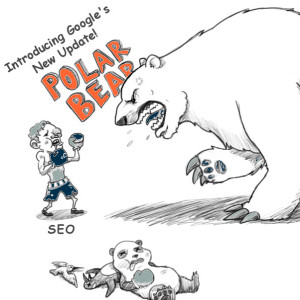
Google changes it’s algorithm 500-600 times a year – that’s over 11 TIMES A WEEK! Fortunately we keep up-to-date with all of that old nonsense because we LOVE reading SEO manuals!
Search Engine Optimisation is not a do once and forget operation. It’s a marathon – not a sprint!
Don’t get beaten by Hummingbirds, Pandas, Penguins, or Polar Bears!
Contact us today and we can explain how Googling can be good for your business!
We do all the Geek stuff
so that you can concentrate on
selling YOUR stuff!
On-Page SEO:
On-page SEO is primarily technical in nature and needs to be applied to every page of your website. Websites are not optimised as a whole but rather one page at a time (but with an overall perspective of what is trying to be achieved on the site).
It’s very hard to discuss SEO and not slip into the jargon. So rather than blind you with science, hopefully the following will give you an insight without putting you to sleep! Zzzzzz…
Your on-page optimisation should accomplish three main objectives:
- Your website should be well-coded for search engines. By this, we mean that it should be easily read and understood by the search engines’ spiders and crawlers.
- Each page of your website should be built around intelligent “keyword phrases” that are likely to draw targeted visitors to that page.
- Your website’s design should be attractive and your content found useful to visitors so as to encourage them to stay as long as possible on your site.
- Keyword phrases should be relevant – trying to trick search engines and visitors to your site is NOT recommended.
Off-Page SEO:
There are a number of off-page SEO tactics but the most important one is how many links your site has “pointing at it” from other websites and pages across the internet.
The more links your site has, the better. This is because each link can be thought of as a “vote” for your site. The search engines assume that if other sites like your site well enough to link to it, then it probably contains valuable information.
So to gain these “votes” for your site, we would use techniques such as Article Marketing, Online Press Releases, Blogging, RSS Feed Syndication, Social Bookmarking, Facebook, Twitter, Video Marketing, Citations, Directory Listings, and a variety of other techniques – to continually build links to your site from high ranking sites.
Organic SEO is all about getting your site onto page 1 for a search or keyword term, and in an ideal world, to the very top of page 1 rankings.
This is achieved by good web coding, keyword rich content, relevant, new posts added often (such as a blog, offers, brochures, or manuals), maintaining and updating your site, and working on getting other sites to “vote” for your site.
Local Search Engine Optimisation SEO:
As you can imagine, increasing your search rankings on Google, Bing, and Yahoo needs to be worked at consistently for national or international search terms.
What SEO is NOT!
- SEO is not paid advertising.
- SEO is not AdWords or PPC (Pay Per Click) advertising.
- SEO is not a directory or listings in other websites.
- SEO is not advertising of any kind.
What SEO is…
- SEO is organic Search Engine ranking.
- SEO is getting “Google Love”.
- SEO is an investment in your own website, which adds value and worth to your web property.
- SEO is working smart vs. working hard.
- SEO translates into unlimited traffic without advertising.
- SEO needs constant maintenance to stay on the 1st page of Google.
- SEO is building trust for your business and website.
- SEO is creating customers for your business.
However, in a LOCAL MARKET good SEO can help you dominate your area!
 How does that help your business? Simply put, it means that it may not take a huge SEO campaign to take over the top spots on page 1. It may be possible to achieve good results quickly and effectively with the SEO we build into all our sites as standard!
If you have a business that covers a specific area such as plumbers, carpet cleaners, kitchen fitters, builders, photographers, dentists, etc., etc., then we just may be able to help you rank above your competitors without a full SEO campaign.
Get in touch and we’ll do an SEO Analysis and let you know what it will take to get your business to page 1!